The Invisible Thread: A Definitive Guide to Bluetooth Technology
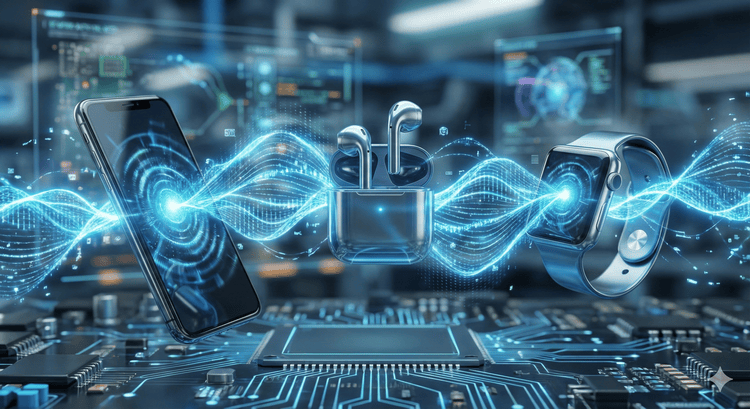
The Invisible Thread: A Definitive Guide to Bluetooth Technology
It is in your pocket right now. It’s in your car. It’s likely in your ears. It connects your smartwatch to your life and your mouse to your laptop.
Bluetooth technology has become so ubiquitous that we rarely give it a second thought—until it doesn't connect. It is the invisible thread that stitches our digital lives together over short distances.
But what actually is Bluetooth? How did a wireless standard named after a Viking king become integral to billions of devices worldwide? And what is the difference between the Bluetooth in an old flip phone and the Bluetooth 5.4 in the newest iPhone?
This is the definitive guide to Bluetooth technology. We are moving beyond simple pairing instructions to explore the mechanics, the history, the vital distinction between "Classic" and "Low Energy," and the future of a wireless world without wires.
1. The Origin Story: Why "Bluetooth"?
In the mid-1990s, the tech world was messy. Connecting devices wirelessly was a fragmented nightmare of proprietary cables and competing, incompatible infrared protocols. Ericsson, a Swedish telecommunications company, tasked Dr. Jaap Haartsen with finding a solution—a universal short-range radio standard.
The project needed a codename during development. Jim Kardach, an engineer from Intel working on the project, had been reading a historical novel about Vikings. He proposed the name of a 10th-century Danish king, Harald "Bluetooth" Gormsson.
King Harald was famous for uniting dissonant Scandinavian tribes into a single kingdom. The analogy was perfect: this new technology was intended to unite disparate communication protocols into one universal standard.
Even the famous Bluetooth logo is a bind rune merging the Younger Futhark runes (Hagall) (ᚼ) and (Bjarkan) (ᛒ)—Harald’s initials. What was meant to be a placeholder name stuck, and a global standard was born in 1998 with the formation of the Bluetooth Special Interest Group (SIG).
2. Under the Hood: How Bluetooth Actually Works
At its core, Bluetooth is a radio communication technology, similar to Wi-Fi or FM radio, but designed for a very specific purpose: power efficiency over short ranges.
Bluetooth operates in the 2.4 GHz ISM (Industrial, Scientific, and Medical) spectrum. This band is unlicensed globally, meaning anyone can use it freely, which is vital for widespread adoption.
However, the 2.4 GHz band is incredibly crowded. It’s shared by Wi-Fi routers, cordless phones, baby monitors, and even microwaves. So, how does Bluetooth not get drowned out by the noise?
The Magic of FHSS (Frequency-Hopping Spread Spectrum)
Imagine trying to hold a conversation across a crowded, noisy dinner party. If you stay on one pitch, you’ll be drowned out. But if you and your partner agree to rapidly change the pitch of your voices in a specific, pre-arranged pattern, you can understand each other clearly despite the surrounding cacophony.
This is exactly what Bluetooth does. It divides the 2.4 GHz band into roughly 79 smaller channels (in Classic Bluetooth). The connected devices hop between these channels rapidly—up to 1,600 times per second—in a pseudo-random sequence known only to them.
This Frequency-Hopping Spread Spectrum (FHSS) ensures that if interference blocks one channel for a fraction of a second, the data just gets resent on the next hop. It makes the connection surprisingly robust.
Masters, Slaves, and Piconets
Bluetooth connections aren't an amorphous cloud; they are structured relationships.
When two devices connect, one acts as the Master (usually the smartphone or computer initiating the connection) and the other as the Slave (the headphones, mouse, or keyboard).
A single Master can control up to seven active Slaves simultaneously in a mini-network called a Piconet. The Master coordinates the clock and the frequency-hopping pattern that all devices in the piconet must follow to stay synchronized.

3. The Great Divide: Bluetooth Classic vs. Bluetooth Low Energy (BLE)
This is the most crucial concept to understand in modern Bluetooth. Today, "Bluetooth" actually refers to two entirely different protocols under one brand name.
If you don't understand this difference, you can't understand why your smartwatch battery lasts for days while your Bluetooth speaker might only last for hours.
Bluetooth Classic (BR/EDR)
This is the original Bluetooth. It was designed to replace cables for continuous, relatively high-speed data transfer.
Use Cases: Streaming high-quality audio to headphones (A2DP profile), hands-free calling in cars, file transfers between old phones.
Characteristics: Higher data throughput, maintains a constant connection, consumes significant battery power.
Bluetooth Low Energy (BLE) / Bluetooth Smart
Introduced with Bluetooth 4.0 in 2010, BLE changed the world. It was designed from the ground up for the Internet of Things (IoT). It is not compatible with Bluetooth Classic.
Use Cases: Smartwatches, fitness trackers, heart rate monitors, smart home sensors (door locks, temperature sensors), beacons.
Characteristics: BLE sleeps most of the time. It wakes up rapidly to send tiny bursts of data and goes back to sleep instantly. This ultra-efficiency allows devices to run for months or years on a tiny coin-cell battery.
Modern smartphones contain dual-mode radios, meaning they can speak both "Classic" (for your music) and "BLE" (for your Apple Watch) simultaneously.
4. The Evolution Timeline: From 1.0 to 5.4
Bluetooth has matured significantly over 25 years.
Bluetooth 1.0 – 2.1 (The Early Years): Plagued by interoperability issues. Speeds were slow (tops 3 Mbps with Enhanced Data Rate in 2.0). 2.1 introduced "Secure Simple Pairing," eliminating the need for constant PIN codes.
Bluetooth 3.0 (High Speed): A strange hybrid that used Bluetooth for pairing but piggybacked on Wi-Fi protocols for faster file transfers. Now mostly obsolete.
Bluetooth 4.0, 4.1, 4.2 (The BLE Revolution): 4.0 introduced Low Energy. 4.2 improved packet size for faster IoT data transfer and introduced IP connectivity, allowing Bluetooth sensors to access the internet directly via a gateway.
The Modern Era: Bluetooth 5.0 and Beyond
Bluetooth 5.0 (released in 2016) was a massive leap forward, specifically for BLE. It offered a "choose your own adventure" set of trade-offs:
2x Speed: Double the data rate of BLE (up to 2 Mbps).
4x Range: By slowing down the data rate and using error correction, BLE signals could travel vastly farther—potentially hundreds of meters outdoors—making it viable for whole-home coverage.
8x Broadcast Capacity: Crucial for beacon technology used in retail and indoor navigation.
Subsequent updates refined this foundation:
Bluetooth 5.1: Introduced Direction Finding. Instead of just knowing a device is "near," devices could determine the precise angle the signal was coming from, enabling centimeter-level indoor positioning.
Bluetooth 5.2: The groundwork for LE Audio (more on that later).
Bluetooth 5.3 & 5.4: Incremental updates focusing on efficiency, connection subrating (better power saving for devices that switch between active and idle states), and electronic shelf label protocols.
5. Bluetooth Mesh: Lighting the Way for IoT
Before Bluetooth 5, Bluetooth was generally a "hub-and-spoke" model (phone to speaker). Bluetooth Mesh changed the topology completely.
Mesh networking allows Bluetooth LE devices to communicate with each other, not just a central hub. If you want to turn on a smart light on the third floor, your phone doesn't need to reach it directly. The command hops from the downstairs bulb, to the hallway bulb, and finally to the third-floor bulb.
This creates self-healing networks perfect for smart buildings, industrial sensor networks, and large-scale lighting automation.

6. Security, Myths, and Bluesnarfing
Because Bluetooth is wireless, people naturally worry about security. Can someone hack my phone walking past me?
The Risks
Historically, older Bluetooth versions had vulnerabilities like "Bluejacking" (sending unsolicited messages) or the more serious "Bluesnarfing" (stealing data from a device).
Modern Defenses
Today, Bluetooth security is robust if implemented correctly by the manufacturer.
Encryption: Modern Bluetooth uses AES-CCM encryption. Breaking a paired connection in real-time is extremely difficult.
Pairing Security: The "Just Works" or numeric comparison pairing methods in Bluetooth 2.1+ and BLE 4.2+ ensure you are connecting to the correct device and exchanging secure keys.
LE Privacy: To prevent tracking, BLE devices can randomly change their MAC address (their digital footprint) periodically, making it hard for passive scanners in shopping malls to build a profile of your movements.
The Golden Rule of Bluetooth Security: Turn it off when you aren't using it in public spaces, and never accept pairing requests from devices you don't recognize.
7. The Future: LE Audio and Auracast™
For two decades, Bluetooth audio hasn't changed much. It used the "Classic" radio and a codec called SBC, which was decent but not great for latency or audiophile quality.
Enter LE Audio, introduced in the Bluetooth 5.2 spec. This is the biggest shift in Bluetooth sound in history. It migrates audio transmission from the power-hungry Classic radio to the ultra-efficient Low Energy radio.
Why LE Audio Matters:
Better Quality, Lower Power: The new LC3 codec offers better audio quality at lower data rates than the old SBC codec, saving massive amounts of battery life for earbuds.
Multi-Stream: True wireless earbuds currently use tricks to connect both buds to your phone. LE Audio supports native independent streams to left and right ears perfectly synchronized.
Hearing Aids: LE Audio will standardize direct streaming to hearing aids from TVs and phones, a massive accessibility win.
The Game Changer: Auracast™ Broadcast Audio
Formerly known as "Audio Sharing," Auracast is revolutionary.
Currently, Bluetooth is one-to-one (your phone to your headphones). Auracast turns Bluetooth into a one-to-many broadcast, like a silent FM radio station.
Imagine walking into an airport bar with multiple TVs. You could pull out your phone, scan for Auracast streams, and choose to listen to the sports game on TV #3 directly into your own earbuds. Imagine a lecture hall where hearing-impaired attendees can receive the presenter's audio directly into their hearing aids without special stadium equipment.
Auracast is poised to change how we interact with public sounds.

Conclusion
From a desperate attempt to get rid of RS-232 cables to a global standard powering billions of IoT devices and revolutionizing how we hear the world, Bluetooth has come a long way.
It is a technology defined by its adaptability. By bifurcating into Classic and Low Energy, and recently evolving into Mesh and Broadcast capabilities, Bluetooth has ensured its relevance for decades to come. As we move toward an increasingly connected world, this invisible blue thread will only become more tightly woven into the fabric of our daily lives.




No comments yet. Be the first to share your thoughts!